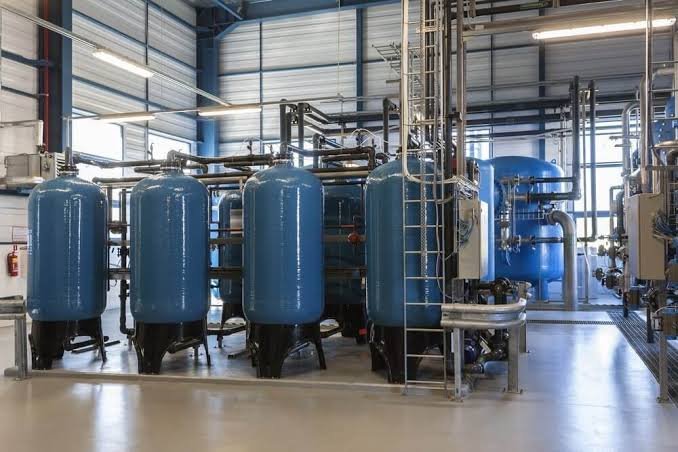
Water plays a surprisingly important role in keeping a business moving. It may be used for cleaning, food preparation, laundry, cooling, manufacturing, equipment operation, or simply providing drinking water to employees and customers. When water quality causes problems, the effects can quickly reach beyond the plumbing.
That’s why commercial water treatment deserves more thought than simply choosing the biggest filter available. The right system should match the water, the building, the equipment, and the way the business operates.
Why Commercial Water Systems Need Careful Planning
A residential water treatment system usually serves a predictable number of people. Commercial properties are different. Water demand can change throughout the day, and some businesses may have intense periods of use.
Restaurants, hotels, healthcare facilities, laundries, offices, and manufacturing sites all have different requirements.
Modern commercial water systems can be designed around these differences. Depending on the application, a system may include filtration, softening, reverse osmosis, deionization, or other specialized treatment technologies.
The important thing is to start with the application rather than the equipment. What works for a small restaurant may not be suitable for a large facility with continuous water demand.
Water Quality Can Affect Equipment
Hard water is a common concern in commercial environments because calcium and magnesium can form scale.
Scale can build up inside water heaters, boilers, dishwashers, laundry equipment, cooling systems, and other water-using machinery. Over time, this buildup may contribute to maintenance requirements and affect equipment performance.
Filtration can also be important when sediment or other particles are present. The right filtration technology depends on what is actually in the water and what the downstream equipment requires.
That’s why water testing is so useful. It provides a clearer picture before a business invests in treatment equipment.
EWS Commercial Water Softener & Filters
For businesses dealing with hardness and filtration concerns, an EWS commercial water softener & filters solution can be considered as part of a broader treatment strategy.
Commercial softening systems are designed to handle greater water volumes and flow rates than typical residential equipment. Depending on the system configuration, softening can help reduce hardness minerals and limit scale formation in water-using equipment.
Filtration, meanwhile, can address specific particles or substances depending on the filter media and design.
Businesses should still evaluate the exact specifications of any equipment before installation, including capacity, flow rate, regeneration requirements, maintenance needs, and the contaminants the system is designed to reduce.
When Deionization Is Needed
Some commercial and industrial applications require water with very low levels of dissolved ions. This is where deionization systems become particularly useful.
Deionization uses ion-exchange technology to remove charged dissolved substances from water. It can produce highly purified water for applications where ordinary filtered or softened water isn’t sufficient.
The technology is used in various settings where water purity is important, such as laboratories, manufacturing processes, electronics-related applications, and certain specialized commercial operations.
Deionization isn’t necessarily appropriate for every business, though. It can be more complex and may require careful monitoring and resin management. The application should determine whether it makes sense.
Softening and Deionization Serve Different Purposes
It’s easy to confuse different treatment technologies, especially when manufacturers use similar terms.
A water softener primarily targets calcium and magnesium hardness through ion exchange. Deionization goes much further by removing a broad range of charged dissolved ions.
Neither should automatically be considered a replacement for the other.
For example, a facility may use softening as pretreatment to reduce hardness before another purification stage. In other applications, deionization may be used independently for a specific process-water requirement.
The right combination depends entirely on the water chemistry and the intended use.
Capacity Matters in Commercial Applications
A system can have excellent filtration technology and still be the wrong choice if it cannot handle the building’s water demand.
Commercial operators should consider average daily consumption as well as peak flow. A restaurant may experience a sharp increase in water use during busy service periods. A hotel can have large morning and evening demand. Industrial facilities may require continuous flow.
Equipment should be sized accordingly.
It’s also wise to discuss future expansion. If the business expects to grow, the treatment system may need enough flexibility to accommodate higher demand later.
Maintenance Is Part of System Design
Commercial treatment equipment needs regular attention. Filters have to be changed, softeners may need salt or regeneration management, and deionization systems require monitoring of resin performance.
A neglected system can gradually lose effectiveness, potentially affecting the equipment or process it was intended to protect.
Before purchasing, ask about service intervals, replacement parts, consumables, monitoring requirements, and technical support. A system that is easy to maintain is often more valuable than one that looks impressive on a specification sheet but is difficult to operate.
Choose a Solution Around the Business
There’s no single commercial water treatment system that works for every property.
A business concerned mainly about hardness may need a commercial softener. A facility dealing with sediment or taste concerns may require filtration. A specialized industrial process may need deionization or a combination of technologies.
The smartest approach is to test the water, understand the application, calculate demand, and then select equipment accordingly.
Good commercial water treatment isn’t about adding technology for the sake of it. It’s about creating a dependable water system that supports the business, protects important equipment, and performs consistently day after day.
When the treatment design fits the operation, water becomes what it should have been all along: a reliable part of the business rather than another problem to manage.