

There’s a funny thing about water—you don’t really think about it until it starts behaving differently. Maybe your glasses come out of the dishwasher looking cloudy, or your morning coffee just doesn’t taste quite right. Sometimes it’s even subtler than that, like your skin feeling drier after a shower.
None of these are emergencies. But they do have a way of lingering in the back of your mind.
And sooner or later, you start wondering if the issue isn’t your soap or your appliances… but the water itself.
It’s Not Just About Clean vs Dirty
Most of us grow up thinking water falls into two categories: clean or not clean. Safe or unsafe.
But in reality, it’s a lot more nuanced.
Water can be technically safe to drink and still carry minerals, chemicals, or impurities that affect how it tastes, smells, or interacts with your home. That’s where the idea of water treatment solutions comes in—not as a luxury, but as a way to fine-tune something you use every single day.
It’s less about fixing a problem and more about improving a baseline.
The Taste Factor (And Why It Matters More Than You Think)
Let’s talk about taste for a second.
You might not think it’s a big deal, but it actually shapes your habits more than you realize. If your water tastes off, you’re less likely to drink it. You reach for packaged drinks instead. You hesitate before filling a glass.
And that hesitation? It adds up.
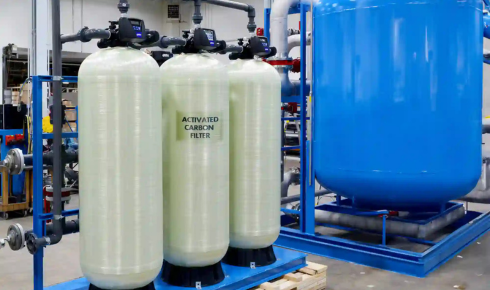
One of the simplest ways to address this is through carbon filtration. It’s a method that targets chlorine, organic compounds, and other elements that tend to affect taste and odor.
The difference isn’t dramatic, but it’s noticeable. Water feels smoother. More neutral. Easier to drink without thinking twice.
And over time, that small shift can change your daily routine in a surprisingly meaningful way.
When Hard Water Gets in the Way
If you’ve ever dealt with scale buildup on faucets or struggled to get soap to lather properly, you’ve likely encountered hard water.
It’s one of those issues that doesn’t seem urgent, but quietly impacts everything—from cleaning to appliance efficiency.
Traditional softeners use salt to remove hardness minerals, but not everyone is comfortable with that approach. Some prefer alternatives that don’t involve adding sodium to the water.
That’s where salt-free conditioning enters the picture. Instead of removing minerals, it changes their structure so they don’t stick to surfaces as easily. The minerals are still there, but they behave differently.
It’s a subtle shift, but for many households, it’s enough to reduce scaling and improve overall usability without altering the water’s composition too drastically.
Choosing What Actually Fits Your Life
The tricky part about water treatment is that there’s no universal solution.
What works for one home might be unnecessary—or even ineffective—for another. It depends on your water source, your local infrastructure, and what issues you’re actually experiencing.
That’s why testing your water is such an important first step. It gives you a clear picture of what’s present, so you’re not just guessing.
From there, you can build a setup that addresses your specific needs—whether that’s improving taste, reducing hardness, or dealing with other contaminants.
And honestly, keeping it simple often works best.
The Overlooked Benefits
Here’s something people don’t always expect: better water doesn’t just solve problems—it enhances everyday experiences.
Your coffee tastes richer. Your laundry feels softer. Cleaning becomes easier because there’s less residue to deal with.
Even your appliances benefit. Less buildup means less strain, which can translate to longer lifespans and fewer repairs.
It’s not flashy. No one’s going to walk into your home and comment on your water system.
But you’ll notice. Quietly, over time.
Maintenance Isn’t as Bad as It Sounds
Let’s address the part everyone tends to avoid—maintenance.
Yes, systems need upkeep. Filters need to be replaced. Components need occasional attention.
But it’s not as overwhelming as it might seem. Most modern setups are designed to be user-friendly, with clear schedules and simple processes.
Once you get into the rhythm of it, it becomes just another small part of your routine—like changing a light bulb or refilling a water bottle.
And considering the benefits, it’s a pretty fair trade.
A Different Way of Thinking About Water
What changes most, once you start paying attention to your water, isn’t the water itself—it’s your perspective.
You stop taking it for granted. You start noticing the details. The way it tastes, the way it feels, the way it interacts with your home.
And that awareness leads to better choices.
Not necessarily bigger or more expensive ones—just more intentional.
Final Thoughts, The Way They Usually Come
If there’s one thing worth remembering, it’s this: you don’t need to chase perfection when it comes to water.
You just need to make it work better for you.
Maybe that means improving taste. Maybe it’s reducing buildup. Maybe it’s just gaining a bit more confidence in what you’re using every day.
Whatever the case, small improvements can make a bigger difference than you’d expect.
And once you experience that difference—even in something as simple as a glass of water—it tends to stick with you.


